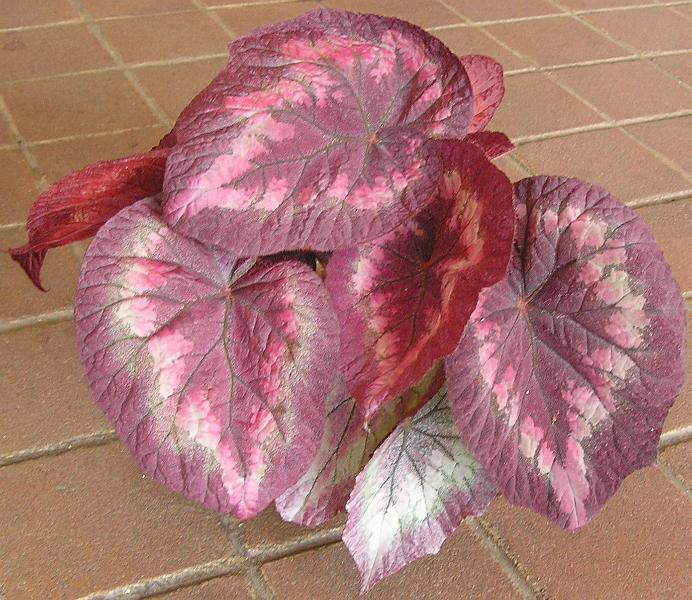
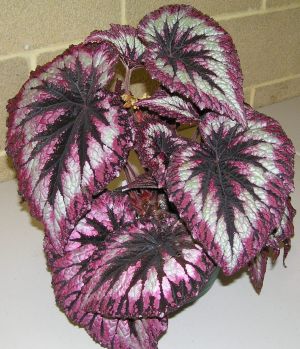
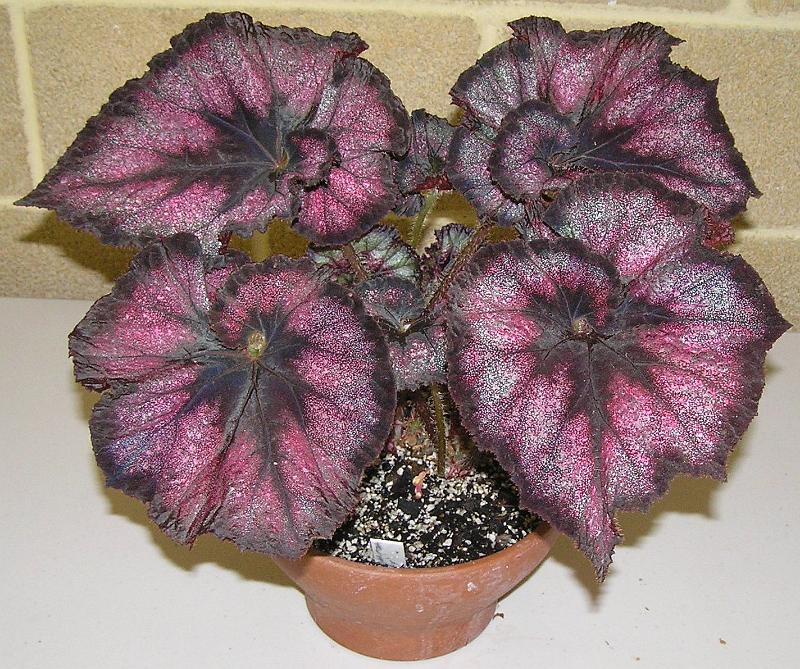
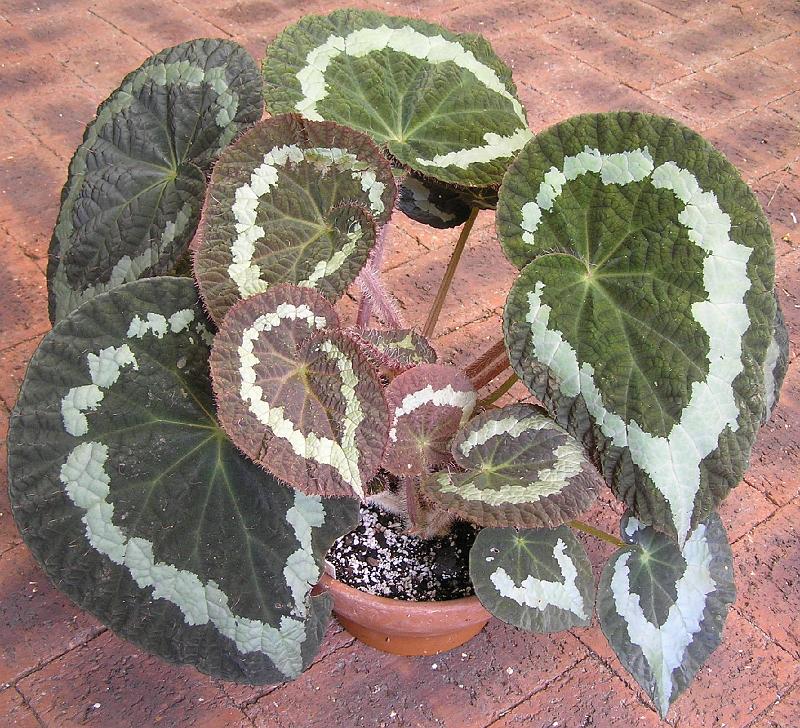

Rex begonias, while sharing a rhizomatous growth habit with other begonias, are grouped separately due to their striking leaf colors and textures. The original Rex begonia was introduced in 1856, having been brought from Assam in India as part of an orchid collection, albeit by mistake.
The leaf coloration of Rex begonias is renowned for resembling various shades of precious metals such as gold, silver, platinum, and precious gems like amethyst, ruby, garnet, topaz, emerald, and opal. Furthermore, their leaf textures often mimic the appearance of luxurious fabrics like silk, satin, velvet, brocade, crepe, tweed, and soft woolens.
Care and Propagation:
- Rex cultorum leaves can be easily propagated by inserting wedges of them halfway into propagating sand. They thrive in humidity, so if grown indoors, it’s essential to create a humid environment for them.
- Place Rex begonias in bright light but avoid direct sunlight.
- Use a well-draining potting mix to keep the soil open and suitable for their growth.
- Delicate Rex begonias are best suited for a cold glasshouse or terrarium, like old fish tanks.
Flower Management:
- If you don’t need the flowers for seed production, it’s recommended to remove female buds, as they can deplete the vitality of the leaves.
Seed Planting:
- In climates like yours, Rex begonia seeds can be planted from late September to February.
- Rex begonia seeds are extremely fine, so handle them with care to prevent dispersing them while planting.
- When planting, gently press the seeds onto the seed mix instead of covering them. A suitable mix is typically 50% peat moss and 50% perlite.
Disease Prevention:
- To combat mold, especially downy mildew, it’s advisable to use a fungicidal spray. Apply this as a preventative measure at the onset of cold weather or at the first signs of mildew spotting.
Growing Conditions:
- Rex begonias are rewarding to grow, and newer hybrid varieties are hardier while retaining their spectacular appearance.
- While there is only one Rex species, the plants you typically grow are hybrids, primarily classified based on leaf color and texture.
- While they are naturally rhizomatous, hybridization has introduced exceptions.
- Water Rex begonias similarly to other rhizomatous begonias, using a lighter, looser potting mix.
- They require more protection, lower light levels, and higher humidity.
- Rex begonias are not well-suited to cold, wet winters and prefer a warm location.
In summary, Rex begonias are prized for their remarkable leaf aesthetics and can be a delight to cultivate with proper care and attention to their specific needs, including humidity, light, and protection from harsh weather conditions. They are particularly well-suited for terrariums and indoor gardening.
 Begonia Society of Western Australia