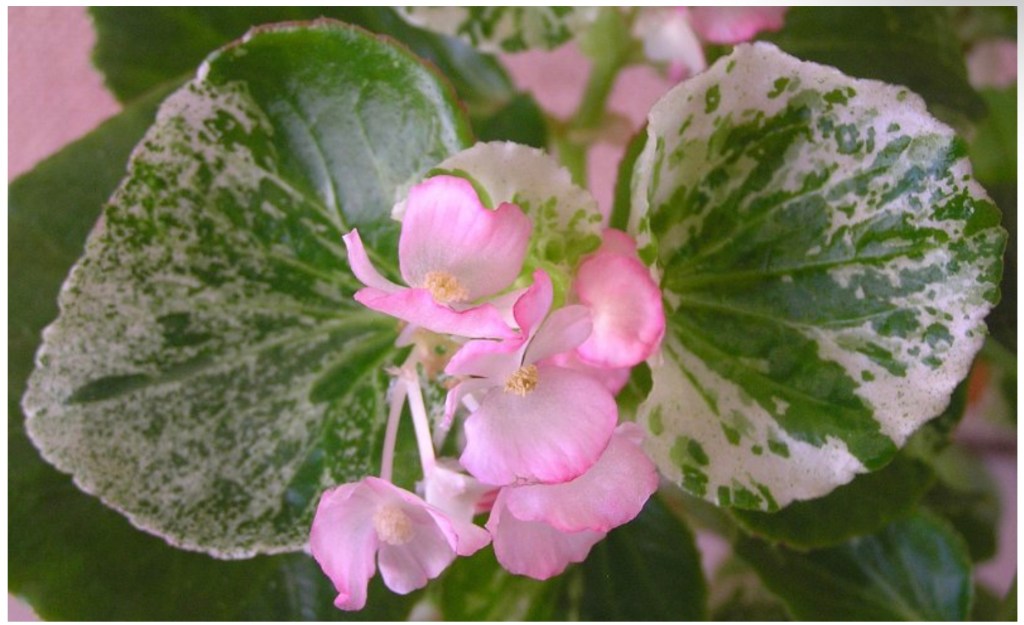
The Wax Begonia, scientifically known as Begonia Semperflorens, is a robust perennial plant prized for its vibrant foliage and continuous blooming. Characterized by waxy, succulent leaves in various hues, including pink, red, and white, it brings an element of sophistication to both gardens and containers. Flourishing in partial to full shade, these begonias thrive in well-drained soil with moderate watering. Their versatility and minimal care requirements make them an ideal choice for gardeners of all levels, providing a reliable and beautiful addition to outdoor spaces.
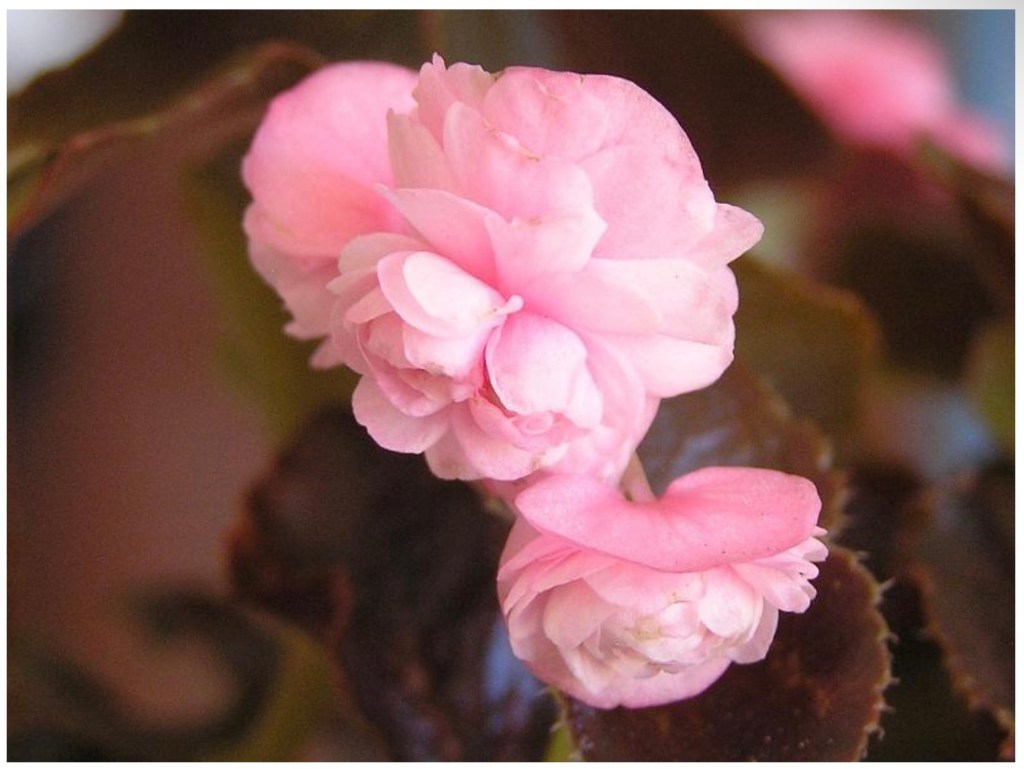
Semperflorens cultorum begonias, commonly referred to as wax begonias or bedding begonias, earned their name, which translates to ‘always flowering,’ due to their year-round blossoms under suitable conditions. The leaves exhibit a range of colours, from greens and bronzes to variegations of green and yellow. The flowers add to their allure, spanning from dark red and pink to white, with newer varieties featuring double blooms.
Ideal growing conditions involve avoiding frost and placing them in full sun positions. Insufficient sunlight may result in leggy growth, so observation is key to meeting their needs. Mass planting is recommended for a more impactful display in gardens. Whether in a garden plot or a container, they prefer an open, well-drained potting mix. Regular feeding with a slow-release fertiliser is beneficial.
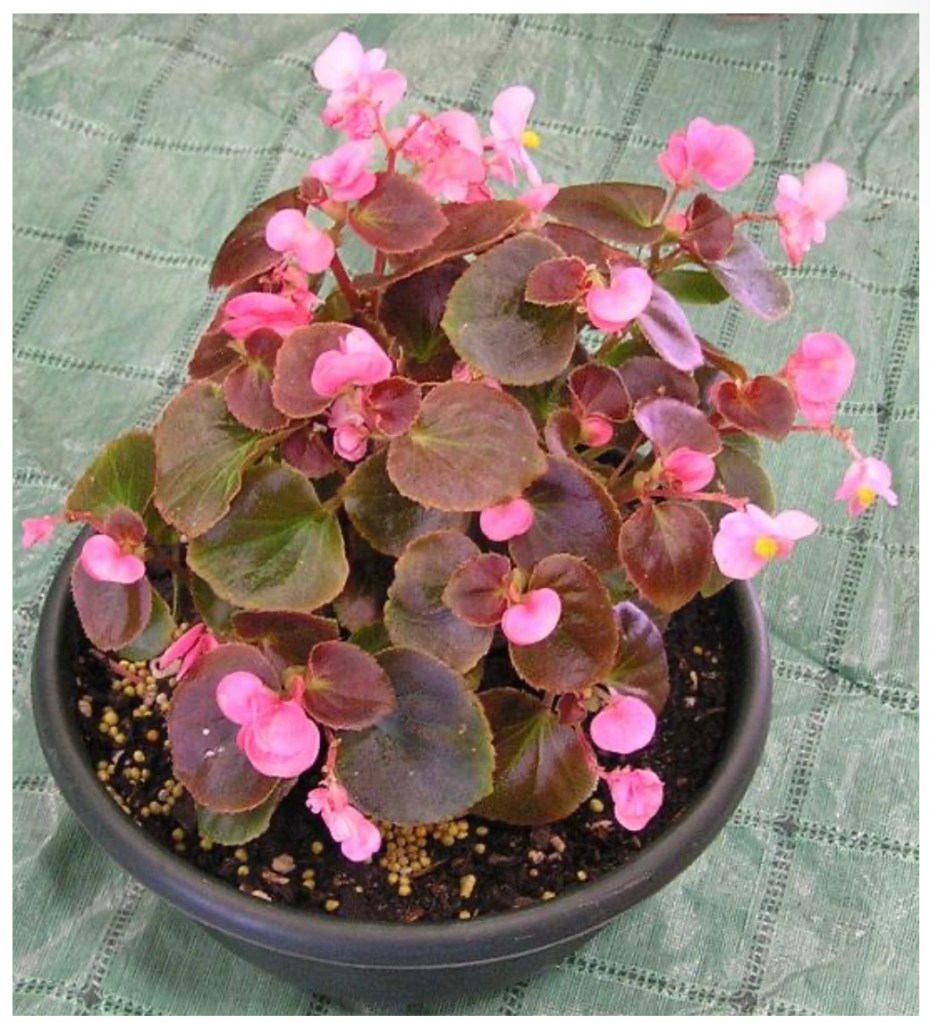
Pruning during the growing season helps maintain a bushy and robust appearance, encouraging continuous flowering. Propagation can be achieved through seeds, division of clumps, or tip cuttings, focusing on branching shoots rather than flower nodes.
Known for its resilience, low water tolerance, and ease of cultivation, the wax begonia is a globally popular choice. While often grown as bedding plants and annuals in colder regions, they can become perennial shrub-like begonias in frost-free areas. The ever-blooming nature of these plants presents single or double flowers in an array of red, pink, and white shades. The leaves typically come in green or bronze, with variegated types adding extra visual interest. The common name “wax begonia” stems from their leaves’ thick, crisp, and waxy texture.
 Begonia Society of Western Australia