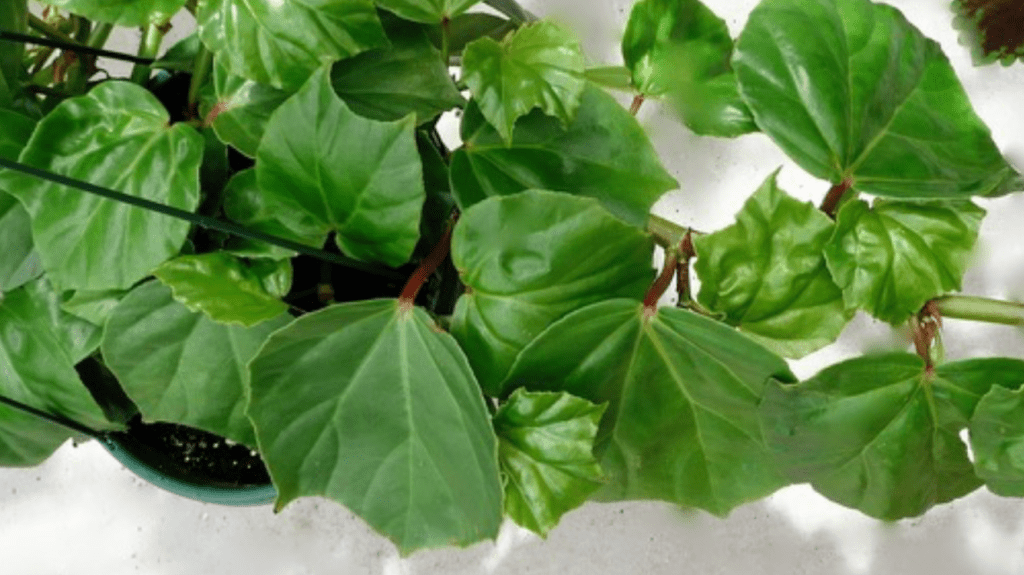
Trailing scandents are any Begonia characterised by slender stems and/or dense foliage that causes it to cascade downward is categorised as trailing. Notable examples include B. procumbens and B. fagifolia. These plants often produce numerous basal shoots when pruned, responding well to pinching, facilitating the creation of lush, bushy specimens. Many trailing species showcase winter blooms, providing a splash of color during the colder months. As implied by their name, these begonias thrive in hanging containers or along trellises. Some bloom from winter to spring, while others showcase their flowers in summer. Early bloomers should be pruned post-flowering in November/December, while others are pruned in spring.
Trailing begonias are primarily cultivated as basket plants, leveraging their cascading nature to display flowers at eye level. While often comprised of species, some hybrid varieties within this category are exceptionally appealing.
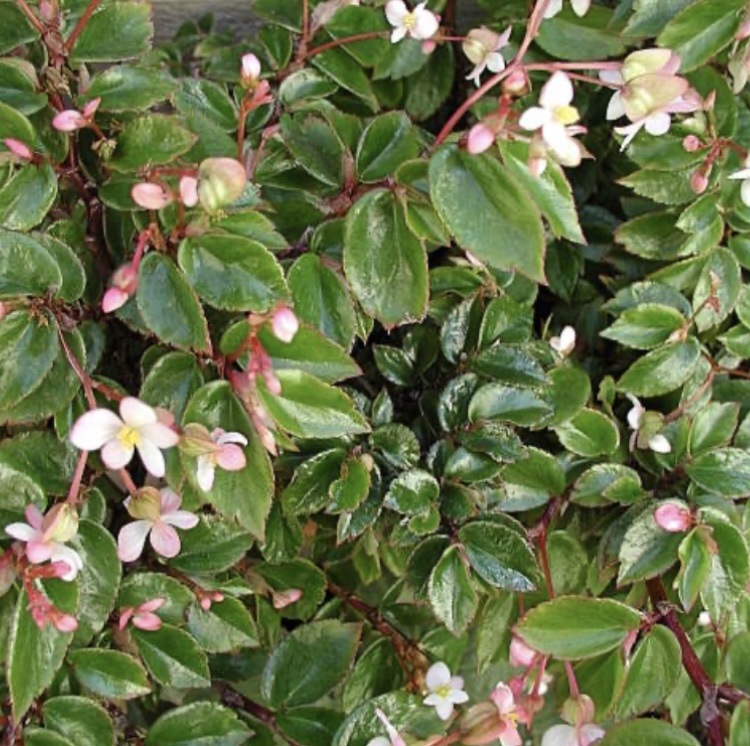
Newer varieties may feature extended blooming periods or even continuous flowering. Some exhibit glossy leaves, resembling philodendrons, while others boast large leaves suitable for climbing up totem poles or trellises. In their natural habitat, these begonias climb tree trunks. White or pink flowers are prevalent among trailing-scandent begonias, making them ideal for hanging baskets and pots, where their foliage and flowers can be showcased. However, with encouragement, some varieties exhibit enthusiastic climbing tendencies.
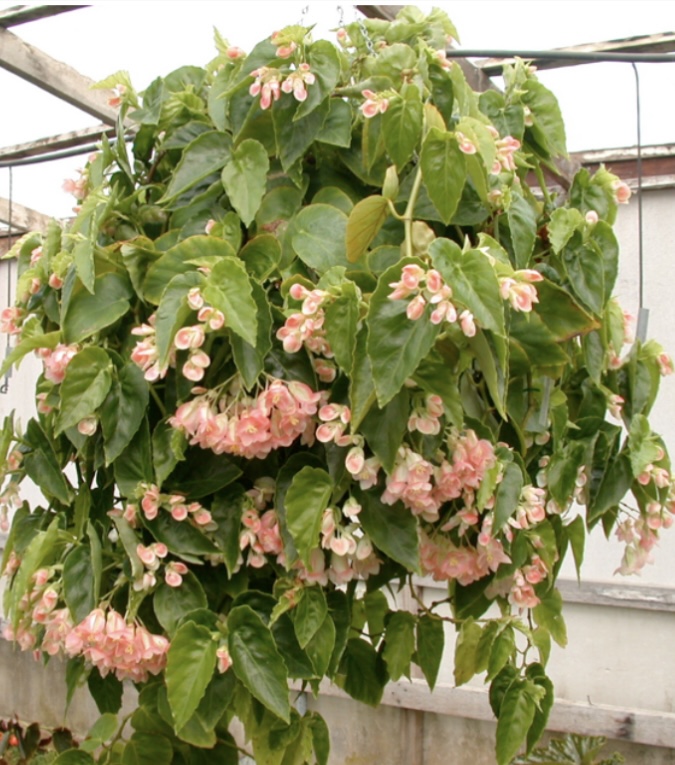
These plants develop long, flexible tendrils and produce additional basal shoots in spring, which readily branch out, resulting in mature, full, and bushy plants.
Growing Conditions: Trailing-scandent begonias have diverse light requirements, necessitating occasional repositioning for optimal growth. They are generally not demanding and thrive when protected from drying winds and midday sun. Filtered light, such as that found under trees, stimulates growth without causing burns.
Feeding: Regular feeding during the growing season, when roots are moist, is recommended. An open potting mix suits these begonias, which prefer more water than many other begonia varieties. It’s essential to avoid allowing the soil to dry out completely.
Pruning: Pruning is typically performed in late spring or early summer after the flowering period, with young plants lightly pinched at the top. Older plants can be cut back, and tip cuttings can be used to propagate new plants, encouraging fresh growth from the base.
Trailing-scandent begonias, comprising around 35 species and 35 cultivars, earned their name from their growth habit, combining trailing and climbing characteristics. Discovered as early as 1775 in the West Indies, these begonias hail from diverse regions, with Brazil, in particular, contributing several species.
These begonias are well-suited for hanging from tree limbs, requiring ample light for full growth and abundant blooms. Potting is critical due to their fragile, pendulous stems, with a shallow container recommended. Care should be taken not to overwater, especially in plastic pots, to prevent waterlogging.
Ideal soil pH falls between 5 to 6.5, and a well-draining mix is essential. Watering frequency depends on environmental conditions, with the guideline to water when the potting mix feels dry to the touch. While staking is generally unnecessary, strategic pruning and pinching enhance the overall appearance of the plant.
Propagation of trailing-scandent begonias is straightforward through stem cuttings, especially those derived from tips during pinching and pruning. Those interested in growing these begonias from seed can refer to the Seed Fund list, with a reminder that seeds from species yield plants true to their parent.
 Begonia Society of Western Australia